How Much Does a Chatbot Cost? Types, Pricing and Uses for Business

What a chatbot costs to launch and to run, the three types of bots, what they do for a business, which channel to choose and when you do not need one.

Roman BarbotkinFounder & CEO
Published
Reading time10 min read
Updated
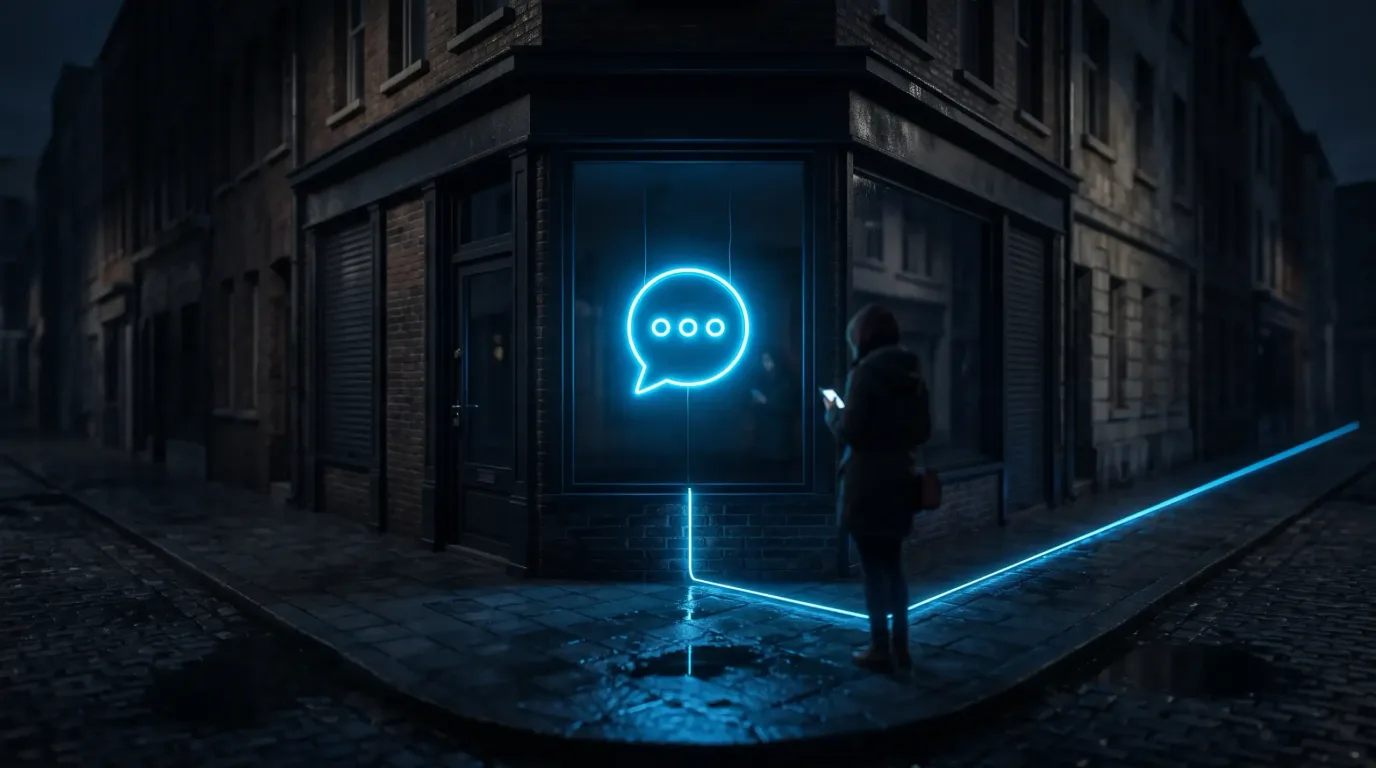
A closed corner shop at night with a glowing blue chat bubble sign in the window and a passer-by looking at a phone
In this article
  1. 01What is a chatbot?
  2. 02How much does a chatbot cost?
  3. 03What does a chatbot do for a business?
  4. 04Website chatbot or messenger: where to put it
  5. 05Chatbot examples for business
  6. 06When you do not need a chatbot
  7. 07How to launch a chatbot for a small business

A chatbot costs from $0 a month on a no-code builder to $2,000 and up for a custom AI chatbot that answers from your own knowledge base. A builder bot follows buttons and scripts, a custom scripted bot is priced per project, and an AI chatbot adds a running cost for the language model, from a fraction of a cent per conversation on an entry-level model. The right tier depends on what the bot has to do.

Below: what a chatbot is, the three types and what each one costs to launch and to run, what a chatbot does for a business, examples by industry, where to put it, when you do not need one and how to launch the first bot.

What is a chatbot?

A chatbot is a program that talks to customers in a chat window: on your website, in WhatsApp, Instagram, Messenger or Telegram. It receives a message, works out what the person wants and replies in seconds, at any hour.

There are two ways a bot can work out what the person wants:

  • By script. The customer taps buttons, and each button leads to a prepared answer or the next question. The bot never improvises, so it never says anything you did not write.
  • By language model. The customer types in their own words, the bot finds the relevant passages in your documents and writes an answer from them. This is what people usually mean by an AI chatbot.

A live chat is a different thing: there a person answers. The two are often combined, with the bot taking routine questions and passing the rest to the team.

How much does a chatbot cost?

Chatbot pricing falls into three tiers: a builder subscription, a custom scripted bot and a custom AI chatbot. The table shows what each one handles and what it costs to launch.

Bot builderScripted botAI chatbot
How it answersButtons and ready-made flowsButtons and flows written for your processFree text, answers from your documents with sources
What it handlesFAQ, lead forms, broadcastsOrders, bookings, order status through your systemsOpen questions, consulting before a purchase, hand-off to a person
Who builds itYour marketer, in a visual editorA developerA team: knowledge base, safeguards, quality checks
Monthly costsSubscription, grows with contactsHosting, messenger feesHosting, model API by usage, messenger fees
Weak spotAny question outside the buttonsEvery new scenario is new codeNeeds a maintained knowledge base
Launch price$0–39 a month
ManyChat plans up to 2,500 contacts
Synapse Team: from $500
3–5 days
Synapse Team: from $2,000
1–3 weeks

Bot builders. You assemble the bot yourself in a visual editor and pay a subscription that grows with the number of contacts. ManyChat is free for up to 25 active contacts, Essential costs $17 a month for up to 250 contacts and Pro $39 a month for up to 2,500 (pricing page, November 2026). The price of your own time is not in that number: someone has to design the flows and keep them current.

Custom scripted bots. A developer writes the flows for your process and connects the bot to your systems, so it can check an order status or book a slot in the calendar. The price is set per project and depends mostly on the number of integrations.

Custom AI chatbots. The bot answers free-text questions from your knowledge base, shows sources and hands the conversation to a person when it is not sure. At Synapse Team an AI chatbot on your knowledge base starts at $2,000 with AI-powered development and takes 1–3 weeks; an assistant built as a standalone product starts at $6,000. The current ranges for all AI work are on the pricing page.

Chatbot pricing models

The launch price is only part of the bill. Running costs come in three forms:

  • Subscription per contact. Builders charge by the number of active contacts or subscribers, so the bill grows with your audience even if most of those people never write again.
  • Per message. WhatsApp charges businesses per delivered message. Since July 1, 2025 the platform bills per message instead of per conversation, and from October 1, 2026 replies inside the 24-hour customer service window are paid again, with the first 1,000 service messages a month free per phone number (Meta pricing documentation, November 2026). Rates depend on the recipient's country.
  • Per usage of the model. An AI chatbot pays the model provider for the text it reads and writes. Entry-level models start at $0.10 per million input tokens (Anthropic API pricing, November 2026), so a conversation of a few thousand tokens costs less than a cent. Larger models cost more and are worth it for complex questions.

A custom bot also needs hosting and monitoring each month.

What drives the cost of a custom chatbot

  • Channels. A website chat alone is the cheapest start. Each messenger adds setup, testing and its own rules.
  • Integrations. Reading the order status from your store or writing a lead into the CRM takes more work than answering from a document.
  • Knowledge base. Ten clean pages are quick to connect. Hundreds of documents with contradictions need sorting first.
  • Languages. A model answers in many languages, but the knowledge base and the checks have to exist in each one.
  • Quality checks. A bot that talks to paying customers needs a test set of real questions and a re-check after every change.

What does a chatbot do for a business?

A chatbot takes over the conversations that repeat. In practice that means five jobs:

  • Answers common questions. Delivery terms, prices, opening hours, return rules. A small business usually gets a lot of these.
  • Collects leads. The bot asks the questions your manager would ask, records the answers and passes a complete request to sales.
  • Takes orders and bookings. A scripted or AI bot connected to your systems books a time slot, places a repeat order or reports the order status.
  • Works after hours. A request that arrives at 11 p.m. gets an answer at 11 p.m., not the next morning.
  • Hands off to a person. When the customer asks for a human, or the bot is unsure, the conversation moves to your team with the full history.

How much of the load a bot can carry depends on the business. Klarna reported that in its first month its AI assistant handled two-thirds of customer service chats, 2.3 million conversations (Klarna press release, February 2024, the company's own figures). Gartner predicted that by 2027 chatbots would become the primary customer service channel for roughly a quarter of organizations (Gartner, July 2022). A company with a small, tidy set of questions will get a higher share than one where every request is unique.

Website chatbot or messenger: where to put it

Put the bot where your customers already write to you. The channels differ in what they cost and what they are good at:

  • Website chat. No platform fee and no rules from a third party. It catches visitors at the moment they are choosing, which makes it the best place for pre-sale questions and lead capture.
  • WhatsApp. The channel many customers already use for business conversations. Messages are paid per delivery, and templates for outbound messages need approval.
  • Instagram and Messenger. Good for stores and services that sell through social media: the bot answers comments and direct messages around ads and posts.
  • Telegram. The bot platform is free for both users and developers (Telegram), and bots are quick to build. Check first whether your audience uses it. Prices and timelines are in a separate guide: how much a Telegram bot costs.

A custom AI chatbot can serve several channels from one knowledge base, so the answers stay the same everywhere. Start with one channel, measure the result and add the next.

Chatbot examples for business

Five typical scenarios: what the customer writes and what an AI chatbot connected to the company's systems does next.

AI sales assistant for an online store

  • Channels: website chat, WhatsApp, Telegram.
  • Customer request: "I need a laptop for work under $1,000, ideally with good battery life."
  • What the bot does: searches the WooCommerce or Shopify catalog, picks 3–5 models, explains how they differ and checks stock. It answers follow-up questions for a buyer who hesitates. When the buyer is ready, it adds the product to the cart or creates the order.
  • Result: the store consults around the clock, and managers spend their time on complex orders.

AI front desk for a clinic or salon

  • Channels: website, WhatsApp, Instagram, Telegram.
  • Customer request: "I'd like to see a dermatologist on Friday after 4 p.m."
  • What the bot does: asks for the details, checks free slots in the CRM or booking system, offers options and creates the booking. It sends a reminder a day before the visit and reschedules on request.
  • Result: fewer missed requests, and booking works at any hour.

AI assistant for a real estate agency

  • Channels: the agency website, WhatsApp, Telegram.
  • Customer request: "I'm looking for a two-bedroom apartment under $350,000, preferably renovated."
  • What the bot does: asks about the area, size and wishes, searches the agency's listings and sends cards with photos and details. When the customer picks a property, it agrees on a viewing time, creates a lead in the CRM and notifies the agent.
  • Result: the agent gets a prepared client whose requirements are already known.

Bot for wholesale orders

  • Channel: WhatsApp.
  • Customer request: a shop owner writes to the distributor which drinks they need and how many.
  • What the bot does: shows current prices, promotions and stock, takes the order and passes it to the logistics system.
  • Result: repeat orders arrive without phone calls or manual re-entry into the system, and the customer gets a confirmation and can track the delivery.

Bot that collects a brief instead of a form

  • Channel: website chat of a company that sells services.
  • Customer request: "We need a website for a dental clinic, how much will it cost?"
  • What the bot does: instead of a long form, it asks short questions in the language of the page: what you need, what you already have, when you want to launch. It follows rules about what to ask in which case and when to stop. The finished brief goes to the team.
  • Result: the manager gets a full description of the task, and the final price comes from people, not from the bot.

All five bots are built the same way: a narrow job, clear rules and a hand-off to a person at the right moment.

When you do not need a chatbot

A chatbot is not worth building in several cases:

  • Few conversations. If you get a handful of messages a week, a person answers them faster and better.
  • Every request is unique. Complex consulting sales rarely repeat, so there is nothing for a script or a knowledge base to hold on to.
  • No source of answers. If the rules live in employees' heads, write them down first. A bot cannot answer from a knowledge base that does not exist.
  • You need actions, not answers. If the task is to process a refund across three systems or to decide what to do with a non-standard request, look at an agent: we compare the two in the article about AI agents for business.

How to launch a chatbot for a small business

  1. Collect the real questions. Export a month of chats and emails and group them. The top ten groups are the bot's first job.
  2. Choose the type. Buttons are enough for a fixed menu of questions. Free-text questions about your product need an AI chatbot.
  3. Prepare the knowledge base. One current document per topic, without contradictions between them.
  4. Start with one channel. Usually the website chat or the messenger where most customers already write.
  5. Set the hand-off rules. Decide when the bot calls a person and who receives the conversation.
  6. Measure and improve. Track the share of conversations closed without a person, the questions the bot failed and customer ratings, then fix the knowledge base.

If you need a custom bot, start with a short conversation with us. We go through your customers' questions, prepare the knowledge base and launch the first bot in one channel. An AI chatbot on your knowledge base starts at $2,000 and takes 1–3 weeks. Describe your task in the chat below, and the team will send a precise quote within one business day. Details of the service are on the AI chatbot development page.

Frequently asked questions

How much does an AI chatbot cost per month?

After launch you pay for hosting, messenger fees if you use WhatsApp, and the model API by usage. Entry-level models start at $0.10 per million input tokens, so one conversation costs less than a cent on such a model and more on larger ones. The total depends on how many conversations the bot handles and which model answers.

Can I build a chatbot for free?

Yes. Builders have free plans: ManyChat is free for up to 25 active contacts, and the Telegram bot platform charges nothing. A free bot works by buttons and scripts, and you spend your own time designing and updating the flows.

What is the difference between a chatbot and an AI chatbot?

A regular chatbot follows a script: the customer taps buttons and gets prepared answers. An AI chatbot understands free text, finds the answer in your knowledge base and writes a reply in its own words, with a source. It also knows when to hand the conversation to a person.

How long does it take to build a chatbot?

A simple bot on a builder can go live in a few days. A custom AI chatbot on your knowledge base takes 1–3 weeks at Synapse Team with AI-powered development. Most of that time goes into preparing the knowledge base and testing the answers on real questions.

Will a chatbot replace my support team?

No. It takes over the repeating questions and works after hours, while people keep the complex cases, complaints and sales conversations. A good bot hands the conversation over with the full history, so the customer does not have to explain everything again.

Can I build my own AI chatbot?

Yes, if the questions are simple: a builder with a ready-made AI block is enough. Order a custom bot when the answers must come from your own documents with sources, or when the bot has to work with your systems: the store, the CRM, the calendar.

Author

Roman Barbotkin

Founder & CEO

Roman founded Synapse Team and leads delivery for clients in the US, EU and Ukraine. He writes about how projects actually run: scope, budgets, timelines, and where AI genuinely helps.

Keep reading

AI

How Much Does a Telegram Bot Cost for a Business?

Telegram bot pricing by type, what drives the quote, monthly running costs, payments and Stars, broadcast limits, Mini Apps and who owns the bot.

10 min read
How Much Does a Telegram Bot Cost for a Business?
AI

AI Agents for Business: What They Do, Examples and Costs

What an AI agent does in a business, how it differs from a chatbot and automation, examples by department, four agents we built, costs and how to start.

9 min read
AI Agents for Business: What They Do, Examples and Costs
Pricing

Ecommerce Website Cost in 2026: Real Prices by Store Type

Real 2026 prices for a Shopify store, a custom store and a store with hundreds of products, AI-powered and classic, plus platform choice, monthly running costs and timelines.

7 min read
Ecommerce Website Cost in 2026: Real Prices by Store Type

Contact us

Let's build something great

I run a business, but I get no clients or leads from the internet. What should I do?

Depends on the goal. Pick what sounds closest and I will suggest a solution with a ballpark estimate:

  • I need a website
  • I want to sell online
  • My site brings no clients
  • I want AI in my business
  • I have a product idea
AI estimate

We reply within one business day. NDA signed before we start.